Retail World Bureau
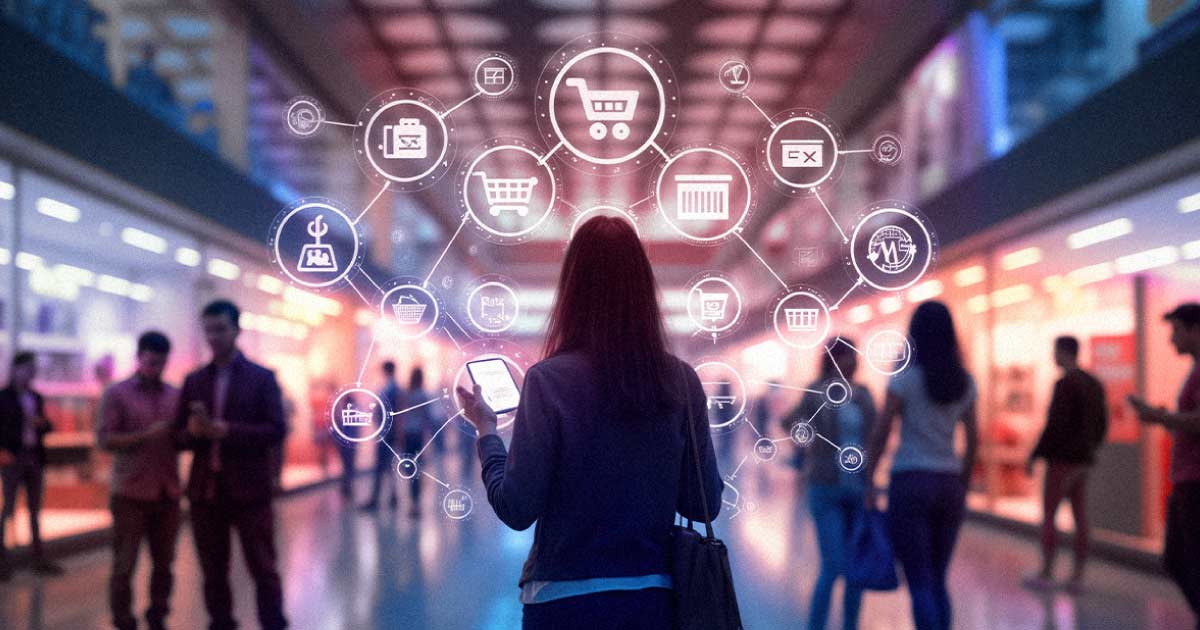
While nearly 80% of global retail spending still occurs in physical stores, the nature of that spending is undergoing a structural shift, according to industry estimates from Deloitte and Mastercard. Today’s consumers no longer distinguish between online and offline—they expect a seamless, continuous experience across both.
According to a recent white paper by an Israel-based smart shopping cart platform, Cust2Mate, more than 60% of shoppers now demand this integration, and when it fails, the result is what industry experts describe as a “digital disconnect”: the collapse of a personalized online relationship the moment a customer steps into a physical store.
This disconnect is not a minor inconvenience—it is rapidly becoming one of the most critical challenges in modern retail. Increasingly, the physical store is no longer just a place of transaction—it is becoming an interface, where data, context, and experience converge to shape every customer decision in real time.
The Six Expectations of the Connected Consumer
To close this gap, retailers must align with six core expectations that now define in-store behavior:
1. Continuous Experience
Consumers expect brands to recognize and remember them across every touchpoint. Nearly 67% of shoppers now demand consistency and personalization, according to the VML Future Shopper Report 2025.
2. Guiding Intelligence
The information-rich nature of e-commerce has reshaped expectations. In-store, 56% of shoppers want access to the same level of intelligence—reviews, comparisons, and recommendations—at their fingertips, according to the data from Adyen Retail Report 2025.
3. Relevant Personalization
Relevance is no longer optional. While 65% of shoppers value personalized recommendations, 39% expect in-store interactions to reflect their past behavior and preferences, according to Deloitte data.
4. Transparent Value
Digital commerce has normalized price clarity. In physical stores, a lack of transparency—hidden costs or unclear pricing—causes 23% of shoppers to abandon purchases before checkout as per the data from Envisage Digital, an England-based software development company.
5. Effortless Rewards
Loyalty is now transactional. According to Mastercard Shopper Snapshot, shoppers expect rewards to be automatically applied, yet 42% report missing out on deals due to friction or lack of visibility at the point of purchase.
6. Seamless Interaction
Friction remains the biggest barrier. Overcrowding drives away 37% of shoppers, while 40% abandon purchases entirely when checkout feels slow or cumbersome, according to the Adyen Retail Report 2025.
Individually, these expectations are manageable. Collectively, they redefine what a physical store must deliver.
From Store to System: Who’s Getting It Right
These expectations are not theoretical—they are already being operationalised by leading global retailers. Nike, through its “House of Innovation” stores, has effectively repositioned the smartphone as the primary in-store interface. Customers can scan products for detailed information, check availability, and reserve fitting rooms via the app—transforming physical browsing into a guided, data-driven journey (Instrument, 2026).
Zara has taken a different approach, focusing on operational synchronization. Its “Store Mode” enables customers to locate products on a digital floor map and fulfill online orders within hours, reflecting a tightly integrated inventory and supply chain system built for immediacy.
In beauty retail, Sephora has redefined product discovery through augmented reality. Its “Virtual Artist” tools allow customers to try thousands of products digitally, reducing friction while increasing purchase confidence (Cognitute, 2025).
Meanwhile, Amazon Go has eliminated one of retail’s oldest pain points. Its “Just Walk Out” technology eliminates checkout queues, turning the store into a frictionless, sensor-driven environment—an innovation linked to larger basket sizes and faster purchasing decisions (AWS, 2026; industry estimates).
Even at scale, Walmart is bridging the divide through its retail media platform, connecting digital engagement with in-store purchases and enabling closed-loop measurement for brands.
Across these models, a clear pattern emerges: the most successful retailers are not digitizing stores—they are redesigning them as intelligent, connected systems. At the same time, the enduring value of physical retail lies beyond efficiency. Stores continue to offer something digital cannot fully replicate—tactile discovery, social interaction, and immersive brand environments. As a result, the future of retail is not frictionless alone, but experiential—where convenience and engagement coexist.
The Technology Powering the Connected Store
What makes this transformation possible is not a single innovation, but an integrated technology stack that turns static retail environments into dynamic, data-driven ecosystems.
- Computer Vision & AI: AI-enabled cameras now go beyond surveillance, tracking shopper movement, identifying stock gaps, and optimizing store layouts in real time.
- RFID (Radio Frequency Identification): By tagging inventory at the item level, retailers achieve near-perfect accuracy, enabling real-time product visibility for both staff and customers.
- Digital Twins: Virtual replicas of physical stores allow retailers to simulate layouts, staffing, and merchandising strategies before implementing them in the real world.
- Mobile POS: By decentralizing checkout, retailers eliminate bottlenecks, allowing transactions to happen anywhere—from the aisle to the fitting room.
Together, these technologies enable a store that doesn’t just react—but anticipates.
The Human Layer: Empowering the Store Associate
Even as technology transforms the store, the role of the associate is not diminishing—it is evolving. Equipped with real-time data, mobile POS systems, and customer insights, store staff are becoming informed advisors rather than transactional operators. In this new model, the most effective retail experiences are not purely digital or physical, but a blend of both—where human intuition is amplified by digital intelligence.
The Cost of Standing Still
The implications of this shift are stark. Retailers that fail to evolve risk more than missed opportunities—they risk irrelevance.
As digital-native expectations reshape behavior, stores that remain transactional, fragmented, or friction-heavy will see declining footfall, lower conversion rates, and shrinking margins. In contrast, those that invest in connected experiences are not only improving customer satisfaction but also unlocking new revenue streams.
The future of physical retail is not about replicating e-commerce—it is about surpassing it.
The modern store is evolving into an intelligent environment where data, personalization, and convenience converge in real time. It is becoming a space where customers are recognized, guided, and rewarded seamlessly—without friction, delay, or disconnect. This transformation is also unfolding unevenly across markets. In mobile-first economies such as India and parts of Southeast Asia, the integration of digital and physical retail is accelerating faster, driven by app-led ecosystems and high smartphone penetration. In the decade ahead, physical stores will not compete on location or assortment alone—but on how intelligently they understand, adapt to, and anticipate the customer.
TAGS :
SHARE :
RECENT POST
 AI is Reshaping Both the… 10 Apr 2026
 Beyond the Cart: How Retail… 09 Apr 2026
 5 Strategic Shifts Defining the… 08 Apr 2026
 Top Retail Cities to Watch… 05 Apr 2026
 5 Changes Coming to the… 01 Apr 2026