
 AI is Reshaping Both the… 10 Apr 2026
 Why Physical Stores Must Evolve… 10 Apr 2026
 Beyond the Cart: How Retail… 09 Apr 2026
 5 Strategic Shifts Defining the… 08 Apr 2026
 Top Retail Cities to Watch… 05 Apr 2026

Younis is a dynamic professional with over 20 years of experience in the FMCG and retail sectors, excelling as an effective catalyst in sales management, business transactions, manpower retention and training, and driving organizational growth. Renowned as a habitual achiever with strong business acumen, he consistently surpasses targets while leveraging exceptional communication and problem-solving skills to deliver results. Colleagues recognize him as a highly creative leader who prioritizes business needs, deeply understanding the market and audience before proposing innovative approaches—capable of working independently yet thriving in collaboration as a true team player, always eager to support, encourage, and promote his team’s success.
Sunil is the Chief Information Officer and SVP – Business Technology & Analytics at Majid Al Futtaim Retail, and a globally recognized leader in digital transformation with more than 28 years of impact across the retail and consumer sectors. He has driven large-scale transformation programs across multiple regions, reshaping omnichannel, e-commerce, data, and supply chain capabilities for some of the most influential retail brands.
Known for translating strategy into execution, Sunil has built a reputation as a trusted board-level advisor, guiding C-suites through technology-enabled growth and enterprise-wide change.
Having earned multiple industry distinctions for his work, Sunil continues to accelerate business performance by aligning technology, analytics, and operating models to deliver measurable commercial outcomes.

Shaik is a retail technology leader with over 26 years of experience driving digital transformation across grocery and fashion hypermarkets and supermarkets. As a CTO, he specializes in IT infrastructure transformation, ERP implementation, and large-scale technology programmes, aligning digital strategy with operational performance and business growth.
He has led high-impact implementations of Microsoft Dynamics Business Central and Navision platforms, modernising retail operations and integrating technology into core business functions. With a strong focus on automation and digital innovation, Shaik has delivered significant efficiency gains, including major cost reductions and productivity improvements across retail environments.
Shaik brings deep techno-functional expertise and leadership capability, focused on building scalable, efficient, and future-ready retail operations.
Ravi Raman, a TEDx speaker and no stranger to a stage, is a media professional with more than two decades of content strategy, brand marketing and team leadership experience.
He launched the regional editions of world-renowned brands such as Wired and Bloomberg Businessweek, and his reach has extended to other leading publications from the New York Times to India Today.

Rami Rihani is a seasoned, multi-disciplinary marketing and customer experience leader with over 17 years of expertise across marketing, e-commerce, omni-channel strategy, and customer retention.
He currently serves as the Chief Marketing Officer at IKEA Saudi Arabia, where he leads brand strategy, customer engagement, insights, and retention initiatives, shaping IKEA’s growth and customer experience across the Kingdom. Prior to this role, Rami served as Acting CMO and Omni-Channel Director, overseeing e-commerce and customer retention for IKEA in both Saudi Arabia and Bahrain.
Earlier in his career, Rami spent several years at Ogilvy, managing integrated campaigns for major regional brands including IKEA, NCB Capital, Kleenex, Kotex and Hempel Paints.
Recognised for his strategic thinking and ability to bridge digital and retail worlds, Rami continues to drive impactful transformation across the region’s retail and consumer landscape.
May Bahjat Kanounji is a visionary brand builder, commercial leader, and transformation catalyst with over 20 years of experience shaping and scaling luxury and premium brands across fashion, beauty, lifestyle, and confectionery in the GCC. Renowned for merging commercial growth with cultural storytelling, May has led strategic brand evolutions that strengthen emotional connection, accelerate performance, and elevate brands to regional prominence.
Throughout her career, she has held senior leadership roles in leading regional companies — steering brand repositioning, omnichannel expansion, retail transformation, product innovation, and creative commercial strategy. Her leadership blends analytical discipline with intuitive brand expression, enabling her to build distinctive identities that resonate across digital and physical worlds with equal strength.

Dr. Martyn Davies is Head of the Retail Sector and leads the City Excellence Division at the Royal Commission for Riyadh City in Saudi Arabia. Previously, he was a Senior Partner and Managing Director of Africa & Emerging Markets at Deloitte. An alumnus of the Young Global Leaders Community of the World Economic Forum (WEF), he has served on numerous advisory groups at the WEF, including the Global Agenda Council on China, and has been an expert adviser to the Mining & Metals Industry Group.
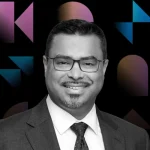
Himanshu Shrivastava is a veteran technology leader with over 25 years of experience in Technology and Digital Transformation.
As Chief Technology Ocer at Al-Futtaim, he spearheads the Group’s technology vision and roadmap. He is responsible for the development and delivery of enterprise-wide digital and data platforms, overseeing technology operations, and providing strategic technology guidance across all operating divisions, including Automotive, Retail, Healthcare, Insurance, and Real Estate. vHe also leads the Blue division, driving the Group’s latest digital business ventures.

Filip Nekvinda is an accomplished leader in the global digital landscape, with a distinguished 19-year career spanning diverse industries. Currently serving as the Chief Information and Digital Officer at Abdul Latif Jameel Enterprises, he is driving the company’s digital strategy and execution across key sectors: Automotive, Healthcare, Logistics, Real Estate, and Diversified Businesses. With a proven track record of spearheading successful digital initiatives at major companies including IKEA, Procter & Gamble, Mars, Mondelēz, and Menzies Aviation, Filip brings a contemporary and agile approach to leadership. Under his guidance, ALJ Enterprises is embracing digital innovation and helping shape Saudi Arabia’s technological evolution in line with Vision 2030.
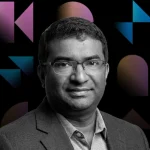
Binoo Joseph is a seasoned technology and transformation leader with over 20 years of experience driving innovation and enterprise-wide digital strategy across customer-centric sectors including real estate, shopping malls, hospitality, retail, and e-commerce. As Chief Digital Officer at Cenomi Centres, he leads large-scale transformation initiatives that reimagine both physical and digital retail environments—enhancing customer experience, improving operational efficiency, and enabling sustainable growth.
With deep expertise in aligning technology and business strategy, Binoo has delivered major transformation programmes across multiple geographies, integrating cloud platforms, smart technologies, data infrastructure, and emerging tech to modernise systems and unlock new value opportunities. He has built and led high-performing technology organisations, fostering a culture of innovation, collaboration, and measurable impact.
Driven by a mission to use technology as a catalyst for positive change, Binoo is committed to shaping the future of retail and creating long-term value for customers, partners, and communities.
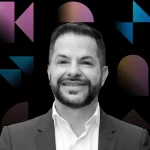
Andreu Marco is the Chief Operating Officer at Chalhoub Group, the partner and creator of luxury experiences in the Middle East. He is responsible for enhancing the Group’s core operations aligning them with the overall strategic objectives. His primary focus is to ensure efficient delivery of innovative, reliable, and customer-focused business services internally and externally in areas like End-to-End Supply chain, Logistics, Admin, Store Operations, and 3D. He is member of the Group’s Ex-com and serves as an advisory role for the Presidents and fellow Ex-Com members, providing strategic direction to the Group’s Operations.
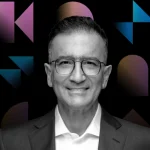
As the CEO of MAGRABi Retail Group, I am responsible for overseeing the operations and growth of the largest eyewear retailer in the Middle East and Africa, with over 200 stores across 5 countries. I have been leading this family-owned business since January 2023, after serving as the COO for 14+ years and the VP of Business Development for three years.
My core competencies include strategic planning, business development, retail management, negotiation, and entrepreneurship. I am passionate about delivering excellence in customer service, product quality, and social impact. I hold a Bachelor of Commerce from Ain Shams University, a Diploma in Diamond Grading from the International Gemological Institute, and an Advanced Management Program certificate from Harvard Business School. I also completed an executive education course on Leading Businesses into the Future at London Business School in 2015.
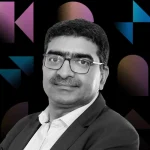
Neeraj has been with Apparel Group for 24 years and spent over 30+ years in the UAE. He has vast experience within the retail industry across various domains such as strategy, general management, operations, mergers and acquisitions and financial operations to name a few.
Neeraj is an Alumni of Harvard Business School & University of London and has been awarded various industry awards like “Best Fashion Lifestyle CFO (UAE) Award at the Global CFO Excellence Awards 2020”, “ World’s Greatest CFO Award 2018-2019 by Asia One” and “Most influential CFO in Fashion and Lifestyle Services (UAE)” at the Global Business Insights Awards 2018.
At Apparel Group, he has an impressive track record of steering the Apparel Group to new heights, he brings a wealth of experience and knowledge to lead the break through initiatives at the Apparel Group.
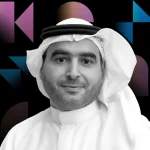
Mohammed Aldabbagh is the Managing Director in KSA at Chalhoub Group. He is responsible for thoroughly understanding and studying the Saudi market trends and consumer insights to support commercial business owners in growing the business. He acts as the ambassador and representative of the Group to secure excellent relationships and identify business and growth opportunities with strategic partners such as governmental entities, real estate companies, VIP customers, suppliers, etc.
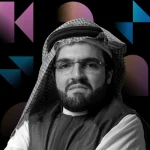
Majed M. AlTahan is a Saudi entrepreneur and investor who pioneered large-scale digital grocery and retail infrastructure in the Kingdom of Saudi Arabia and the Middle East. His work focuses on building scalable digital infrastructure that supports long term consumer behaviour change and national retail transformation.
Majed is the Founder and CEO of International Applications Company (IACo), a digital transformation and commerce infrastructure company. He played a foundational role in launching Saudi Arabia’s first scaled online grocery service in 2016, Danube Online, in partnership with BinDawood Holding, the Kingdom’s leading food retailer. IACo develops and operates the e-commerce platforms for Danube and BinDawood. BinDawood Holding later acquired a 62% stake in the company.
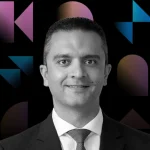
Appointed in 2025, Hani Weiss is the Chief Executive Officer of Max Fashion, a UAE-based value fashion omnichannel brand selling apparel and footwear across more than 250 stores in over 15 countries in the Middle East, Africa and Asia. Max is the largest retail brand belonging to Landmark Group, a US$ 7.5bn omnichannel retail and hospitality conglomerate.
Hani Weiss has extensive experience in retail of over 25 years, beginning his career in 2001 as a store manager at Majid Al Futtaim Retail which owns and operates the Carrefour franchise among other brands, rising through the ranks to be CFO in 2014 and then CEO from 2017 till 2024.
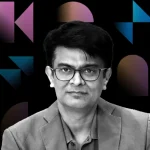
A strategic leader with over 20 years of experience, specializing in driving transformational growth and profitability in the retail sector. Demonstrated success in scaling and optimizing global retail brands such as Adidas, Reebok, Timberland, Vero Moda, and Jack & Jones. Leveraging over a decade of strategic leadership in the Middle East as Vice President of Apparel Group, consistently delivering outcomes that set businesses on a path to sustainable, long-term success.
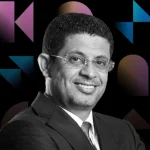
Ammar is a seasoned CEO and Board Member with over 25 years of leadership experience across manufacturing, retail, and healthcare sectors. He has a proven track record in driving business transformation, operational excellence, and sustainable growth, with a strategic focus on maximizing shareholder value, building high-performance teams, and delivering superior customer experiences. Passionate about scaling businesses that balance market success with positive community impact, Ammar is committed to shaping visionary organizations that contribute meaningfully to both industry and society.
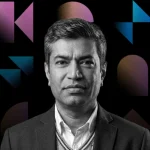
Alok is the Chief Executive Officer of Tim Hortons GCC, bringing over 28 years of leadership experience across F&B services, quick service restaurants (QSR), retail, and retail development. He has a proven track record of driving growth and operational excellence across large, multi-market organisations.
With deep expertise in scaling high-performance teams across multiple locations, Alok has led complex business transformations, managed full P&L ownership, and delivered strong financial and customer-centric results. His leadership spans end-to-end retail operations, expansion strategy, operational optimisation, and customer experience enhancement.
Recognised for his ability to build brands, accelerate regional footprint expansion, and elevate service standards, Alok continues to play a pivotal role in shaping the future of the QSR and retail landscape in the GCC.

Cindy Chua is the Senior Investment Lead at Jobstreet Singapore, part of the SEEK Group. She oversees full funnel marketing investments across digital and offline channels, shaping how brands connect with audiences and drive sustainable growth. Her focus is on aligning media strategy with brand and user journeys, creating meaningful engagement and measurable outcomes.

Harriet leads Singapore’s largest experience design team. She works end-to-end—from strategy to execution to enhance customer experiences and drive human-centered innovation. A natural connector, Harriet collaborates across technology, brand, transformation, behavioural science, and design to shape both present and future experiences.
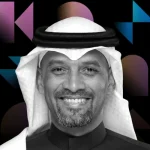
Abdullah is an enterprise leader, board member, and CEO advisor with over 28 years of experience driving large-scale transformation, growth, and operational excellence across the retail, FMCG, pharmaceutical, manufacturing, and consumer goods sectors. He currently serves as Chief Operating Officer and CEO Advisor at Panda, where he leads operations and supply chain across more than 200 stores, five distribution centers, and 16,000+ employees, overseeing multi-billion SAR operations across Saudi Arabia and Egypt. Known for aligning strategy with execution, Abdullah specializes in enterprise transformation, organizational scalability, and leadership development, with a strong focus on building high-performance cultures, resilient operating models, and long-term value creation in line with national transformation agendas such as Vision 2030.

Yong Yau Goh is the Chief Marketing Officer at BullSwipe, a global fintech platform that converts crypto to fiat instantly. He helms BullSwipe’s brand, marketing and communication development across its African, Middle Eastern and Asian markets, and has over two decades experience as an award-winning brand communicator. Prior to BullSwipe, Yong Yau was the Chief Marketing Officer at the AWHL Group, Singapore’s largest conglomerate of integrated health, wellness and beauty brands. Leading regional teams across diverse business verticals, he oversaw the positioning, transformation and communication strategies for the group’s flagship brands. Most of Yong Yau’s career, however, has focused on the agency’s side, where he led full-suite creative and communication teams in Singapore, Myanmar and Shanghai at the Coal Group. This was where he consulted for and engaged CEOs and senior management in some of the region’s leading corporates to take their organisations to greater heights in terms of brand direction, communication approach and business strategy — with proven results. These corporates include regional giants like StarHub, DBS, Mapletree, the Mottama Group and the METRO Group. Yong Yau is also a doctoral candidate at the Golden Gate University, where his work focuses on AI-driven marketing and communication technologies.

I lead at the dynamic intersection of business strategy, technical infrastructure, and growth operations. My core philosophy is clear: architecting autonomous ecosystems that liberate global headcount growth from revenue expansion.
By weaving together complex SaaS telemetry with unified data taxonomies spanning sales, product, marketing, and customer success, I empower enterprises to evolve from reactive reporting to proactive, automated revenue engines. I built the “Single Source of Truth” (SSOT) that offers C-suite executives the clarity needed to navigate intricate customer journeys and make pivotal, board-level decisions.
Throughout my career, I have dedicated myself to optimising the vital balance between top-line revenue generation and systemic risk mitigation. At TikTok, I mapped risk-versus-revenue trade-offs, assessing initiatives across User, Regulatory, and Platform risk vectors against Tapped, Untapped, and Lost revenue to unlock $500M in untapped platform monetisation and prepare executives for US Congressional hearings.